- Trade Truce & Turbulence
- Posts
- Trade, Truce, & Turbulence

Houthi Run the Red Sea: Despite continued U.S. strikes and military superiority, more than 50% of Red Sea trade is avoiding the route today. The Houthi hit 3 ships in 3 days following the first U.S. strikes, watch here. The growing cost to insure ships sends them around Africa to save money despite added fuel costs and ~12 days of added travel. Biden outlines the recent strikes ineffectiveness. We suggested an open-ended conflict was likely last week. Plans for a sustained military operation against the Houthi was leaked yesterday and even President Biden concedes a near term resolution seems farfetched. The Houthi have been mobilizing forces in the past 24 hours.
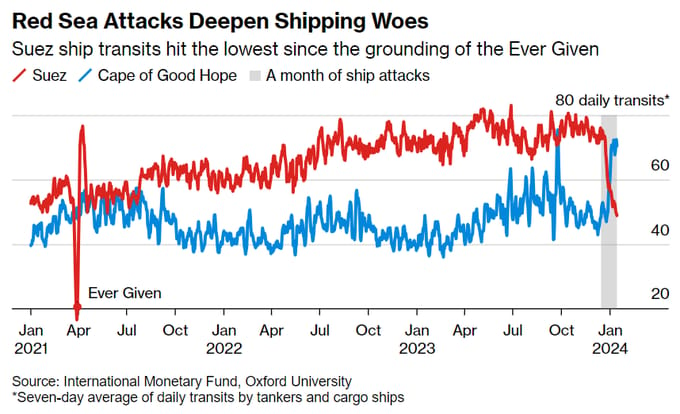
Potential Supply Chain Shock: Shipping is being impacted across all segments, containers and tankers transits shown above. Elongated trade routes may stretch supply chains thin. The globalized economy continues to send shipping rates rocketing higher, see containers below. Do not anticipate a return to the 2021-2022 crisis; do proceed with caution. Petroleum tankers could see an extreme supply shortage. Rates had an extreme move last week as more tankers began avoiding the Red Sea. Lost supply chain efficiencies threaten Federal Reserve Banks’ fight against inflation. Issues in the Panama Canal only compound the problem.
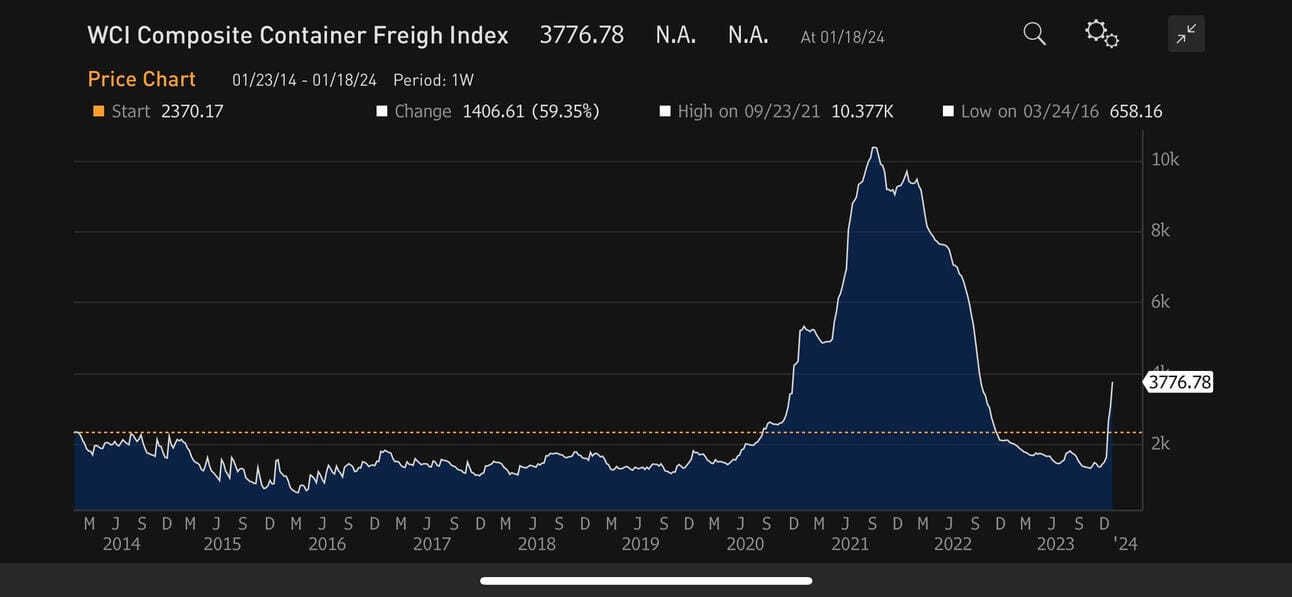
Source: Drewry, Bloomberg. Note: Cost to ship a container over the last decade.
Israel Prepares for War with Hezbollah: Hezbollah launched eight attacks into Northern Israel early this week. The IDF responded with airstrikes on Hezbollah launch sites and leaders. The Washington Post reported the IDF plans to escalate military operations on its northern border if an agreement is not met with Hezbollah by the end of January. The northern border remains on maximum alert, with the IDF redeploying their advanced weapons detection system “Sky Dew.”
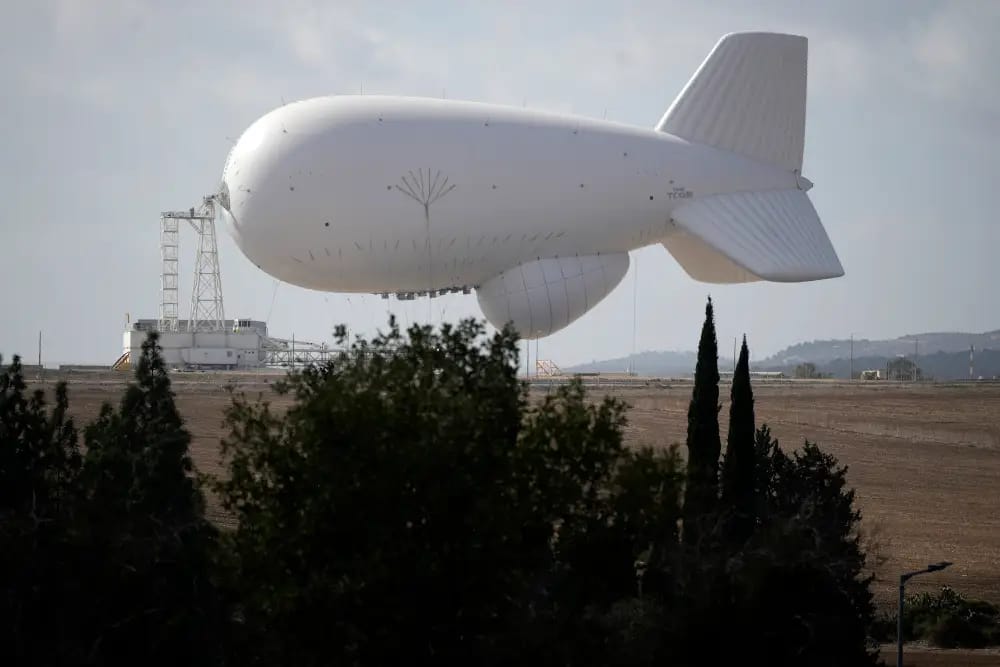
Source: Business Insider. Note: Israeli Sky Dew Blimp Radar System
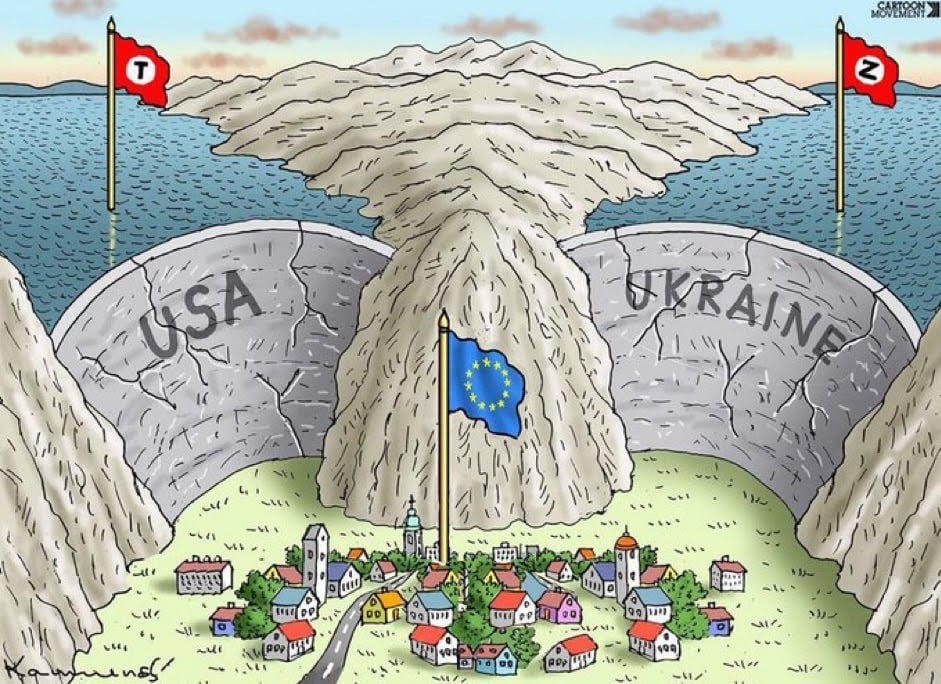
NATO Prepares for Russia: Sweden’s Minister of Defense and a leaked Germany military document suggested that Russia may invade. Baltic states announced the construction of boarder defense zones with Russia days later. NATO will be running an exercise with 90,000 persons and 31 nations next week. It’s the largest since the cold war. EU partners have shortchanged defense spending for a decade and are acting with urgency. Recent increases to defense budgets may make Russia’s most compelling opportunity the present. Russia tested its electronic warfare capabilities in Kaliningrad.
El Salvador A Becon of Hope for Ecuador: Ecuador’s war against narco-terror continues. Gangs murdered the prosecutor assigned to try those who held-up a live news broadcast last week. Ecuadorian President Noboa shares commonalities with El Salvadorian President Nayib Bukele. Both were steadfast they would end the violence that had torn the two nations apart. Extreme measures have sent El Salvador’s murder rate below the United States.

Iran and Pakistan Trade Airstrikes: Iran launched airstrikes on insurgency groups residing in Pakistan on Tuesday. Pakistan returned fire Thursday on insurgency groups residing in Iran. The Afghani based Taliban were quick to broker peace between Iran and Pakistan. The Taliban launched an attack on the Pakistani border just a day later.
Tensions Build between Israel/U.S. and Iran: Iran deployed forces in Yemen following the first U.S. airstrikes. Iranian Revolutionary Guard (“IRG”) ground forces strengthen Houthi capabilities and suggests Iran’s openness to direct conflict. IRG forces launched attacks in Ebril Iraq to destroy an unconfirmed Mossad spy base. Iranian backed militants followed with ballistic missile attacks on U.S. troops based at the Al-Asad Air Base in Iraq. Israel launched airstrike killing five senior members of the IRG, which Iran vowed to avenge. U.S. strikes in Yemen killed Houthi, Hezbollah and Iranian leaders yesterday.